
own thoughts on food, on eating, on our relationship with it in the years since, I now see, in re-reading her work with fresh eyes, that many of my own now firm-held beliefs and feelings around food were being explored and centred by Grigson decades before I was even born. The word ‘pioneer’ is thrown around a lot - but she really was. In her way of thinking and writing about food, its value, its connections and implications, she was, that other cliché, ahead of her time.
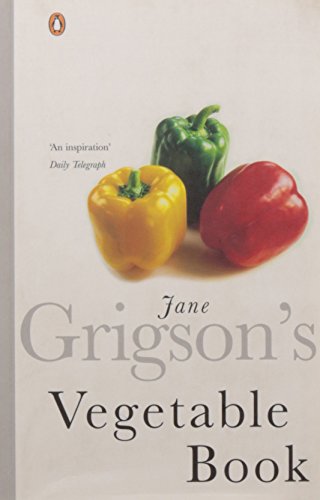
This is a sentiment shared by fellow British food writer, Elizabeth David, from whom Grigson took inspiration, and with whom she developed a close friendship, frequently enjoying “long Sunday morning telephone conversations” together (a true sign of times gone by - can you imagine the reaction if you rang someone up first thing on a Sunday morning for a long chat nowadays? Your number would be deleted from their phone forever more). David remembers the effect of Grigson on the world of food writing when she first appeared on the scene in the 1960s. Describing what a breath of fresh air she found her, and her writing, to be, she reminds us how rare food writing such as Grigson’s was at the time, highlighting “the clarity of writing, and the confident knowledge of subject and history”. Grigson was, indeed, tireless in her endeavour to do more in the world of food writing than just be a lister of ingredients and recipes. All of her books read almost like wonderfully accessible culinary textbooks, leading us through in-depth explorations of the history of food, of the provenance of ingredients and recipes, never forgetting to address the ways in which this is relevant today. Through Grigson’s writing, she paints a picture of the background to our relationship with food. Through thoroughly researched and expertly-explained accounts, she teaches us about culinary heritages and their influences, as well as offering eerily accurate musings on future food concerns, predictions that have turned out to be extremely prescient. I drew this distinction before in my writings on Anna Jones, and on Nigel Slater (a protégé of Grigson’s, in a way. In following in her footsteps as a food columnist for The Observer, Slater has often referred to the influence Grigson’s writing had on his own) - what makes someone a true food writer, what makes a book more than just a run of the mill cookbook, is the obvious passion of the writer, the thought and research put into the topic, and the awareness that this is their life, this is truly how the writer cooks and eats and thinks. In making it obvious to the reader that food, its meaning, its history, its centrality in our lives is a passion of theirs rather than just a way to make money, the writer draws us in and gains our trust. We trust them to teach us, not just to tell us, about food, and how it shapes our lives. Grigson wrote primarily about the relationship the people of Britain have with food. The trope of British food as inedible irked her. What is British food, anyway? Britain’s local, raw ingredients, in fact, encompass an extraordinarily broad array of fresh, flavourful and nutritious produce. Its culinary history includes many seasonal recipes which showcase this. (While I’m speaking about Britain here, as this was the main focus of Grigson’s writing, this discussion is highly relevant to us on this island, too). That people might not be aware of this is not a failure of the land to provide the food, or of those who came before for not passing on their knowledge of “good food”. It comes from a commodification of food, and a subsequent loss of connection. Whether due to lack of time or habit of convenience or more pressing priorities, many of us have just lost, or never nurtured, connection with food, how to prepare it, how to appreciate it. As Grigson put it: “the weakness is [...] the lack in each of us of a solid grounding in skill and knowledge about food, where it comes from, how it should be prepared”. She was fully aware of the reasons for this, the challenges facing the ways in which we produce and access food. While glad of the reassurance provided by “the background of an unfailing larder”, and understanding of the convenience of frozen, canned, pre-packaged ingredients, she worried about our increasing disconnect from food at its source, the waning interest in preparing meals from scratch using fresh ingredients, and the effect that this disconnect and convenience might have on future generations. She worried what blind acceptance of this new relationship with food would mean for food history, food culture, and our overall ability to truly enjoy the process of preparing meals with fresh, local, seasonal food. She was adamant in her belief that to lose this ability is to lose too much: “The sad thing is that, unless we fight, and demand, and complain, and reject, and generally make ourselves thoroughly unpopular, these delights may be unknown to our great-grandchildren. Perhaps even to our grandchildren. It is certainly more convenient with growing populations, to freeze the asparagus and strawberries straight from the ground, to dye and wrap the kippers in plastic, to import hard, red frozen lamb from New Zealand, and to push the walnuts straight into drying kilns.” She described this way of thinking of food as “back to the primitive idea of eating to keep alive”. Seeing food as mere sustenance, a chore to get out of the way, rather than something to relish and take time over. The term “food snob” is a common refrain launched at those who extol the virtues of “local”, “seasonal”, “organic”, at those who are accused of turning their noses up at frozen and canned supermarket foods. As noted above, there is, indeed, a role for this way of preserving, transporting, and storing food. It is important to acknowledge, though, that, for many, the focus on fresh and local isn’t based on some sort of puritanical idea of “good” food and “bad” food. The slow food and organic movements didn’t pop up just so the world’s snobs could all gather and have a good laugh at everyone else. It is based on an awareness of what is at stake when we eschew local farmers and producers and turn solely to supermarkets. Grigson was utterly prescient on this, on her discussion of the nefarious role of big business and marketing in our food system, on the damage it has done to local farmers and producers, to our community connection, to our conception of in-season produce, to food diversity and to the pockets of but a few. In her words: “It is also true that a good many things in our marketing system now fight against simple and delicate food. Tomatoes have no taste. The finest flavoured potatoes are not available in shops. Vegetables and fruits are seldom fresh. Milk comes out of Friesians. Cheeses are subdivided and imprisoned in plastic wrapping. ‘Farm fresh’ means eggs which are no more than ten, fourteen or twenty days old. Words such as ‘fresh’ and ‘home-made’ have been borrowed by commerce to tell lies.”. But we are not just losing flavour and freshness in relying on a handful of companies to provide our food to us. While the effect of our food systems on the environment and the climate has become painfully obvious to us in recent years, Grigson was already aware of the environmental effects of producing and supplying food in the way we have become accustomed to: “The encouragement of fine food is not greed or gourmandise; it can be seen as an aspect of the anti-pollution movement in that it indicates concern for the quality of environment. This is not the limited concern of a few cranks. Small and medium-sized firms, feeling unable to compete with the cheap products of the giants, turn to producing better food.”. That the words she wrote throughout the 1960s and beyond still hold true today, if not more so, speaks to her deep understanding of and connection with food, its history and its value. On my re-reads, David’s description of Grigson as “always entertaining as well as informative” repeatedly sprang to mind. Entertaining she was. While she admirably managed to walk the fine line between explaining her research and her thoughts, rather than preaching, she refused to pander. On occasion, when something really bothered her, she didn’t hold back. I found this sometimes loss of political correctness and sudden inability to mince her words to be highly entertaining. I delighted in her straightforward, unapologetic way of voicing her opinions on these occasions - it struck me that she most certainly existed in a world before social media, where many of us now are much more careful with our words, testing the water before committing to a stance, for fear of backlash. An example: at the sheer mention of “organic” or “local”, the rebuttal proffered is often that of cost. Of course, certain food is cost-prohibitive for some, but what Grigson took issue with was the bandwagon crew who wave this opinion around as an excuse, rather than a genuine reason. In her book English Food, Grigson lampoons the “entirely populist point of view” that spending extra on quality food is unreasonable to expect of people. She writes: “In a country that spends the amount ours does on hard liquor, gambling, ice cream of a worthless kind, sweets, cakes, biscuits, this is nonsense. If people choose to spend it that way, fair enough. But let them not plead poverty as an excuse for bad food”. At the core of it all, Grigson’s emphasis was on appreciating and making the best of what was available. Yes, she championed the importance of fresh, tasty, good quality, seasonal food, which, contrary to popular belief, existed in Britain in abundance, if only people were interested enough to open their eyes to it (again, this is, of course, relevant here in Ireland, too). Yes, her main advice, really, was to be conscious and aware, to care, to visit local markets, learn what is in season, stock your store cupboards, learn some basic cookery skills, take an interest. But she was also realistic and nuanced in her thinking and expectations. We will all rely on convenience. We will all make excuses. As long as we are confident within ourselves that we are trying our best as much of the time as is possible, that’s the best we can do. A last note: Spending part of the year in France (it is said that her move to France is what really spurred her interest in the world of food writing: "because cooking is a central part of life, it should be as carefully written about as any other art form"), Grigson was endlessly aware of, and wrote thought-provokingly on, the shared nature of food cultures, reminding us that “no cookery belongs exclusively to its country, or its region”. Instead, “what each individual country does do is to give all the elements, borrowed or otherwise, something of a national character”. Think of the beauty of this truth. Revel in the knowledge that all well-loved recipes and dishes are essentially tweaks, replications. If we think of cooking like this, then we achieve two things: we feel a sense of excitement and pride in these dishes that have been transplanted and layered on and passed down, and we discover that we are all capable of cooking. As she put it: “Anyone who likes to eat can soon learn to cook well”. I’ll end with a quote that especially resonated with me. I feel it encapsulates Grigson’s attitude, and writing, very well. “Somehow I can never quite suppress a naive optimism; an optimism that is buffeted every time I visit my local shops, but yet refuses quite to lie down even when confronted with perceived realities.”. I feel a little bit of naive optimism might be just what is needed at the moment. Jane Grigson books Quoted and Referenced Good Things (1971) English Food (1974) Jane Grigson’s Vegetable Book (1978) The Enjoyment of Food: The Best of Jane Grigson (1992) Kelly Girardi Instagram @kelly_girardi Linktree kelly_girardi
0 Comments
Your comment will be posted after it is approved.
Leave a Reply. |
Categories
All
Archives
March 2024
AuthorsRecipes from Katie Verling & Jacques |
 RSS Feed